Understand the process. Prepare for the conversation. Keep your child at the centre.
Separation is hard. Parenting through it is harder. When you add a formal dispute resolution process you've never been through before, it's easy to feel overwhelmed before you've even started. This course changes that. In seven focused modules, you'll learn what Family Dispute Resolution actually involves, what the practitioner can and cannot do, what your rights are, and how to prepare yourself and your thinking before you walk into the room. Most importantly, you'll understand how to keep your children's needs at the centre of every conversation. You don't need a law degree. You just need to know what to expect.
$97.00

About the Course
Maybe a date has already landed in your inbox and your stomach dropped when you saw it. Maybe you have replayed the last conversation with the other parent a dozen times, wondering what you should have said instead. Family Dispute Resolution asks a lot of people who are already stretched thin. Stay calm. Think clearly. Make decisions that will shape your children's lives, often while sitting across from someone you can barely talk to anymore.

Say What You Mean
This course was built for parents standing exactly where you are now, uncertain about the process, unsure what a mediator expects, worried that one wrong word could undo months of careful thought. Over seven hours, worked through at whatever pace suits you, you will cover the practical groundwork that turns a dreaded session into a manageable one. Parents who understand the process, and their own responses under pressure, tend to leave mediation with agreements that actually hold. Parents who walk in cold often do not get a second chance at that first impression.

When It Matters
Most people do not lose ground in mediation because they stop caring. They lose it because the right words disappear exactly when they need them. This module works through how to state what you need plainly, stay on topic once things get tense, and recognise the exchanges that can derail thirty minutes of progress in under a minute. You leave with language you have actually practised, not a theory of what good communication is supposed to sound like.
The Family Dispute Resolution (FDR) Parenting Process
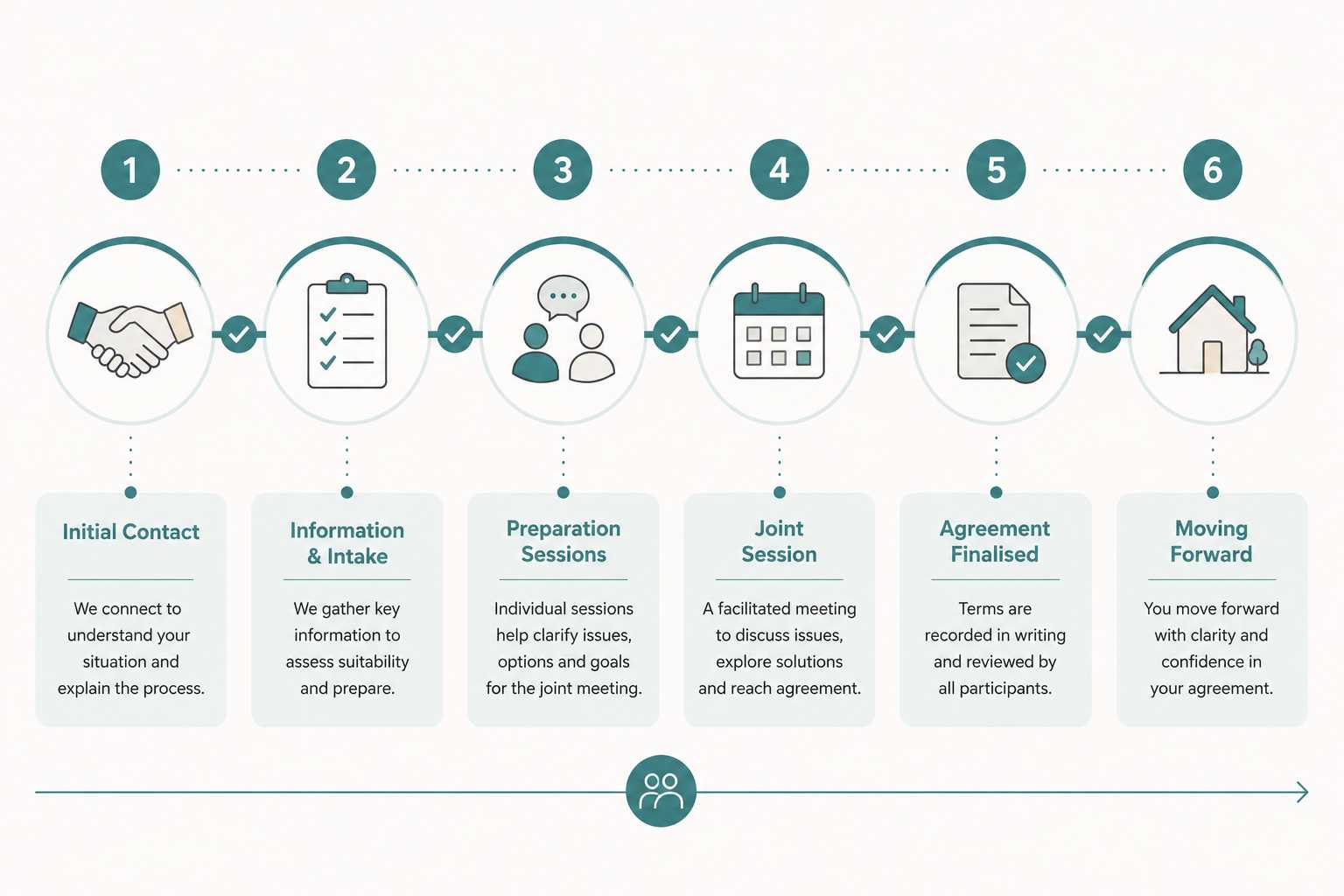
Know what to expect before you arrive FDR is not court. The practitioner does not decide who is right, does not make parenting decisions on your behalf, and does not tell you what agreement to reach. Understanding that distinction matters enormously, because it changes how you approach the session. The course explains the practitioner's role, what each stage of the process looks like, and the clear boundaries of what can and cannot happen. That knowledge is not complicated. But it is genuinely useful. Prepare around your child, not just around the dispute The course places the best interests of the child at the heart of your preparation. You'll work through the six factors under section 60CC(2) of the Family Law Act 1975 (Cth), the additional consideration for Aboriginal and Torres Strait Islander children, parental responsibility, and your child's developmental needs. Then you'll apply that thinking directly to your own situation, so you arrive with a child-focused framework rather than a list of grievances. Understand safety, family violence, and protection orders Safety is treated as the foundation of FDR, not an afterthought. The course explains how safety screening works, what family violence and coercive control mean in this context, how protection orders interact with the process, and the circumstances in which FDR may not be suitable at all. If safety is a concern for you, this module matters. Prepare yourself, not just your paperwork Knowing the process is only part of the equation. Preparing yourself to participate in it is the other part. Module 6 works through emotional regulation, stress responses, personal triggers, and practical strategies for staying grounded before, during, and after the session. You'll leave with a Personal Resilience and Wellbeing Plan that is yours to bring to your intake appointment.

Common Questions Before You Enrol
“I do not have much time.” Fair concern, and a common one. The course runs seven hours in total, broken into short lessons you can complete in the gaps of an ordinary week, on a lunch break, after the kids are asleep, wherever forty minutes turns up. Nothing here demands a weekend you do not have. “Will this actually help, or is it just theory?” Every module ties directly back to your session. You finish with a completed preparation worksheet, a personal resilience plan, and a drafted opening statement ready to use, not an abstract understanding of mediation as a concept. “What if my situation involves family violence?” Module 4 is built specifically around safety screening, protection orders, and how family violence changes the FDR process. If safety is a live concern for you, this module alone is worth the enrolment. If you are currently unsafe, please contact the services listed in Appendix A before working through this course. “Is this a substitute for legal advice?” No, and it will not pretend to be. This course prepares you for the mediation process itself. Your family lawyer remains your source for legal advice specific to your circumstances.
Course Curriculum
-
-
(Included in full purchase)
About This Course
-
(Included in full purchase)
-
-
(Included in full purchase)
Learning Objectives
-
(Included in full purchase)
1.1 What Is Family Dispute Resolution?
-
(Included in full purchase)
1.2 The Legal Basis for FDR in Australia
-
(Included in full purchase)
1.3 Who Is an FDRP?
-
(Included in full purchase)
1.4 Why FDR? The Benefits Over Going Straight to Court
-
(Included in full purchase)
1.5 The FDR Process: An Overview
-
(Included in full purchase)
1.6 Module 1 Summary
-
(Included in full purchase)
-
-
(Included in full purchase)
Learning Objectives
-
(Included in full purchase)
3.1 Why the Best Interests of the Child Comes First
-
(Included in full purchase)
3.2 The Six Best Interests Factors
-
(Included in full purchase)
3.3 Aboriginal and Torres Strait Islander Children
-
(Included in full purchase)
3.4 Parental Responsibility
-
(Included in full purchase)
3.5 The Children's Developmental Needs by Age
-
(Included in full purchase)
3.6 Applying Best Interests Thinking to Your Mediation
-
(Included in full purchase)
3.7 Module 3 Summary
-
(Included in full purchase)
-
-
(Included in full purchase)
Learning Objectives
-
(Included in full purchase)
4.1 Safety Is the Foundation of FDR
-
(Included in full purchase)
4.2 What Is Family Violence Under Australian Law?
-
(Included in full purchase)
4.3 Protection Orders
-
(Included in full purchase)
4.4 How Family Violence Affects the FDR Process
-
(Included in full purchase)
4.5 Children and Family Violence
-
(Included in full purchase)
4.6 If You Are Experiencing Family Violence
-
(Included in full purchase)
4.7 Module 4 Summary
-
(Included in full purchase)
-
-
(Included in full purchase)
Learning Objectives
-
(Included in full purchase)
5.1 Why Preparation Matters
-
(Included in full purchase)
5.2 Know Your Issues
-
(Included in full purchase)
5.3 Think in Terms of Positions and Interests
-
(Included in full purchase)
5.4 Think About What the Other Parent Wants
-
(Included in full purchase)
5.5 Gather Your Documents
-
(Included in full purchase)
5.6 Prepare Your Opening Statement
-
(Included in full purchase)
5.7 The Ground Rules of Mediation
-
(Included in full purchase)
5.8 Managing Your Emotions in the Session
-
(Included in full purchase)
5.9 Practical Checklist for the Day
-
(Included in full purchase)
5.10 Module 5 Summary
-
(Included in full purchase)
-
-
(Included in full purchase)
Learning Objectives
-
(Included in full purchase)
6.1 Why Self-Development Belongs in Preparation
-
(Included in full purchase)
6.2 The Emotional Terrain of Separation
-
(Included in full purchase)
6.3 Preparing Yourself Before Mediation
-
(Included in full purchase)
6.4 Recognising Your Stress Signals and Triggers
-
(Included in full purchase)
6.5 During Mediation: Staying Steady in the Room
-
(Included in full purchase)
6.6 After Mediation: Recovery and Integration
-
(Included in full purchase)
6.7 Post-Traumatic Growth: A Quieter Possibility
-
(Included in full purchase)
6.8 Building a Sustainable Resilience Routine
-
(Included in full purchase)
6.9 Self-Compassion and the Inner Critic
-
(Included in full purchase)
6.10 Modelling Resilience for Your Children
-
(Included in full purchase)
6.11 Bringing It All Together: A Personal Plan
-
(Included in full purchase)
6.12 Module 6 Summary
-
(Included in full purchase)
-
-
(Included in full purchase)
Learning Objectives
-
(Included in full purchase)
7.1 The Types of Parenting Agreements
-
(Included in full purchase)
7.2 What Happens If FDR Does Not Result in an Agreement?
-
(Included in full purchase)
7.3 The Obligations of Advisers
-
(Included in full purchase)
7.4 Reviewing and Updating Your Parenting Plan
-
(Included in full purchase)
7.5 Communication After Mediation
-
(Included in full purchase)
7.6 The Long View: What Your Children Need from You
-
(Included in full purchase)
7.7 Property and Financial Matters Under the 2024 Reforms
-
(Included in full purchase)
7.8 Time Limits for Property Matters
-
(Included in full purchase)
7.9 Module 7 Summary and Course Completion
-
(Included in full purchase)
-
-
(Included in full purchase)
Downloadable Resources
-
(Included in full purchase)
-
-
(Included in full purchase)
Appendix A: Key Phone Numbers and Support Services
-
(Included in full purchase)
Appendix B: Key Legislation and Section References
-
(Included in full purchase)
Appendix C: Parenting Mediation Preparation Worksheet
-
(Included in full purchase)
Appendix D: Personal Resilience and Wellbeing Plan
-
(Included in full purchase)
Ready to Enhance Your Mediation Skills?
Enroll now to gain invaluable insights, strategies, and confidence for successful Family Dispute Resolution (FDR) Mediation.
$97.00